Category: Augmented Reality
-

The ethics of XR in the classroom
On 14 October, 2021, Fridolin Wild participated in an expert panel as part of the policy-focused event “XR in the classroom” on invitation of the IEEE’s Global Initiative for Ethical Extended Reality. The event put the ethics of XR-and-education in the spotlight, highlighting problems and achievements from an interdisciplinary perspective.…
-
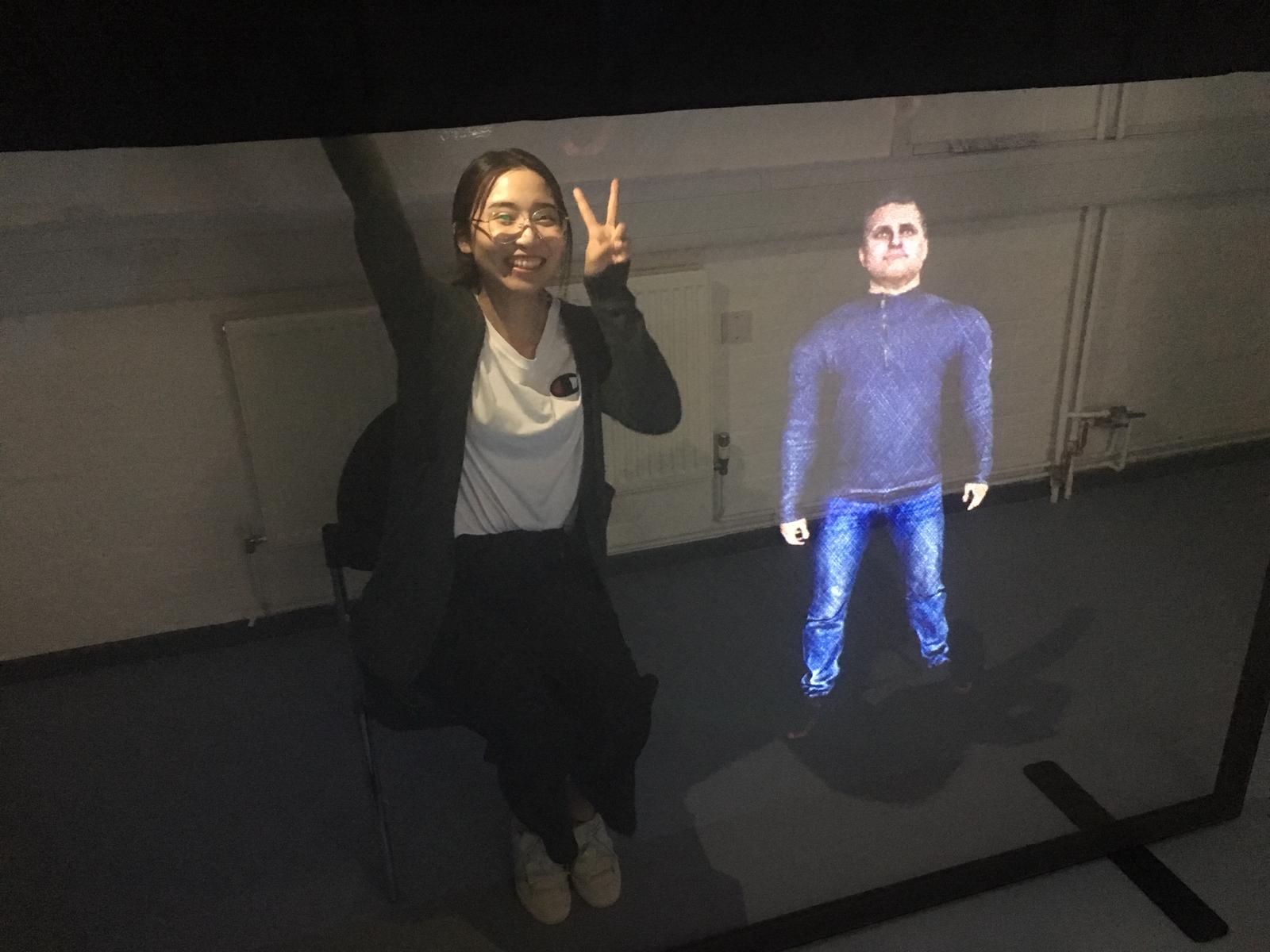
Measuring whether users trust holographic intelligent agents
A new metric scale for measuring trust towards holographic intelligent agents was presented on the workshop of Beyond Questionnaires: Innovative Approaches to Evaluating Mixed Reality of the BHCI’21 conference by Xinyu Huang and Prof. Dr. Fridolin Wild. They identified, selected, and refined over a hundred items related to trust, checked…
-

Design Dimensions for Holographic Intelligent Agents
On 14th June, Xinyu Huang and Prof. Dr. Fridolin Wild contributed to the 1st international workshop on Multimodal Artificial Intelligence in Education (part of AIED’21) with a comparative analysis across nine intelligent, holographic agents, extracting common design dimensions into a new framework. “Holographic AI”, so Huang & Wild (2021) have…
-
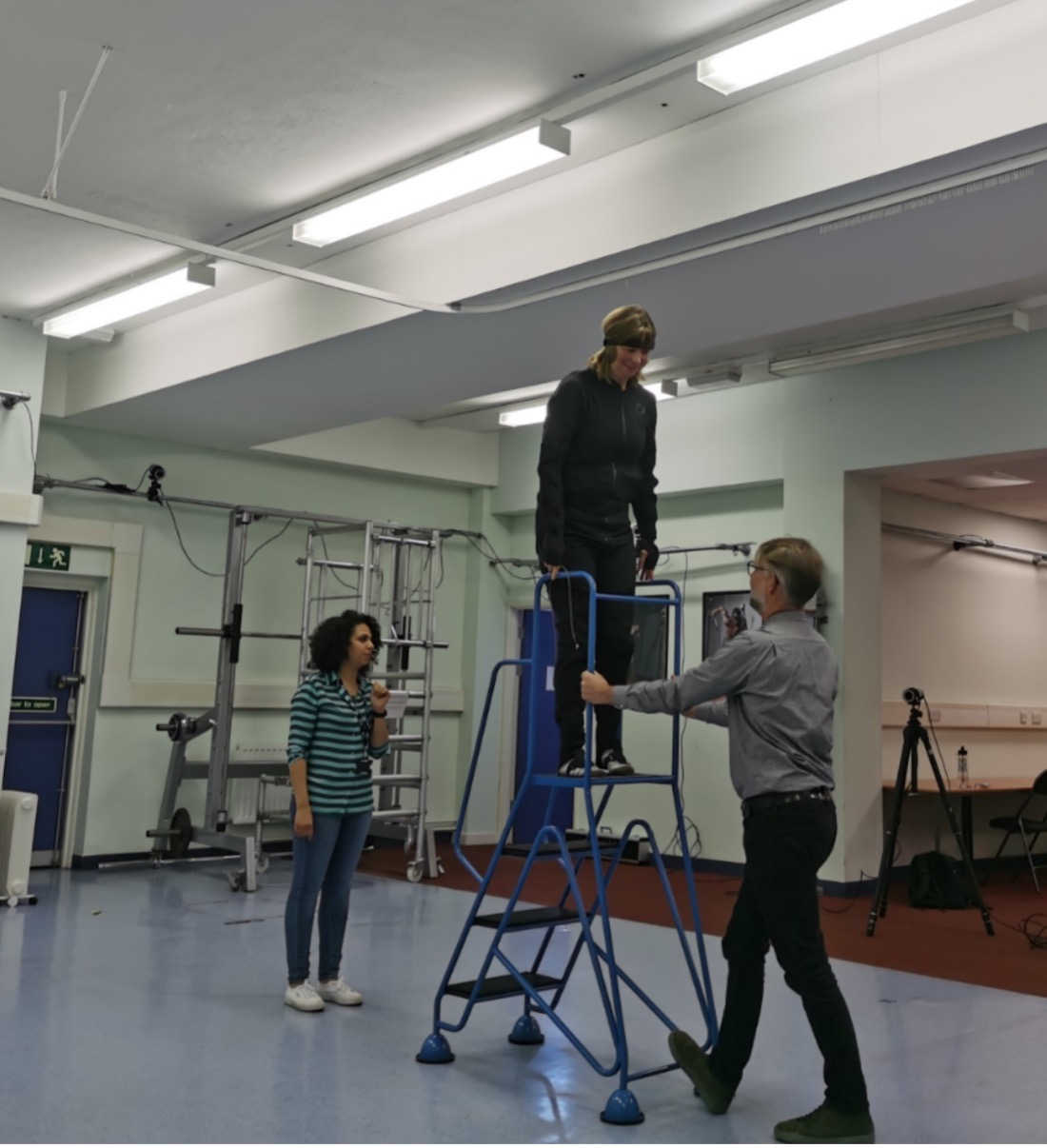
Investigating Social Stereotyping – with Motion Capture
Within the Development coordination disorder stigmatisation (DCD-stigma) project, we investigate the relationship between social stereotype and perception of disordered coordination, jointly with psychologists. 3D motion capture is used as method to record and observe poor coordinated movement. We subsequently visualise the recordings of people with DCD and without, allowing for…
-

Managing ISO/IEC standards for AR/VR
The UK nominated Prof Dr Fridolin Wild as convenor of a key standards working group, WG 11, for future-proofing AR/VR in a joint technical committee of the International Standards Organisation (ISO) and International Electrotechnical Commission (IEC). Dr Wild’s appointment as convenor of Working Group 11 comes with the remit to…
-

Training with eXtended Reality: MirageXR v1.5 released
IET’s Performance Augmentation Lab proudly announces the stable release version 1.5 of MirageXR, the flagship cross-platform AR learning tool (available for iOS, Android, and Hololens 1+2). MirageXR now has a whole range of new character models available and augmentations can be kept alive across the action steps of an activity,…
-

Moodle plugin for Augmented Reality learning activities
The ARETE ARLEM repository plugin fits Moodle with web services and a user interface to create, store, retrieve, view, and assign IEEE P1589-2020 conform Augmented Reality learning activities. Users can publish their activities to the Moodle server publicly, or keep them private, and subsequently roll them out to learners in…
-

Visual effects for learning – and more
With the stable release 1.3 of MirageXR, we are moving forward on our journey of re-inventing how education and training will be conducted in the future. MirageXR is a reference implementation of an eXtended Reality (XR) training system, compliant with IEEE P1589-2020, the standard for scaling up XR learning experiences.…
-
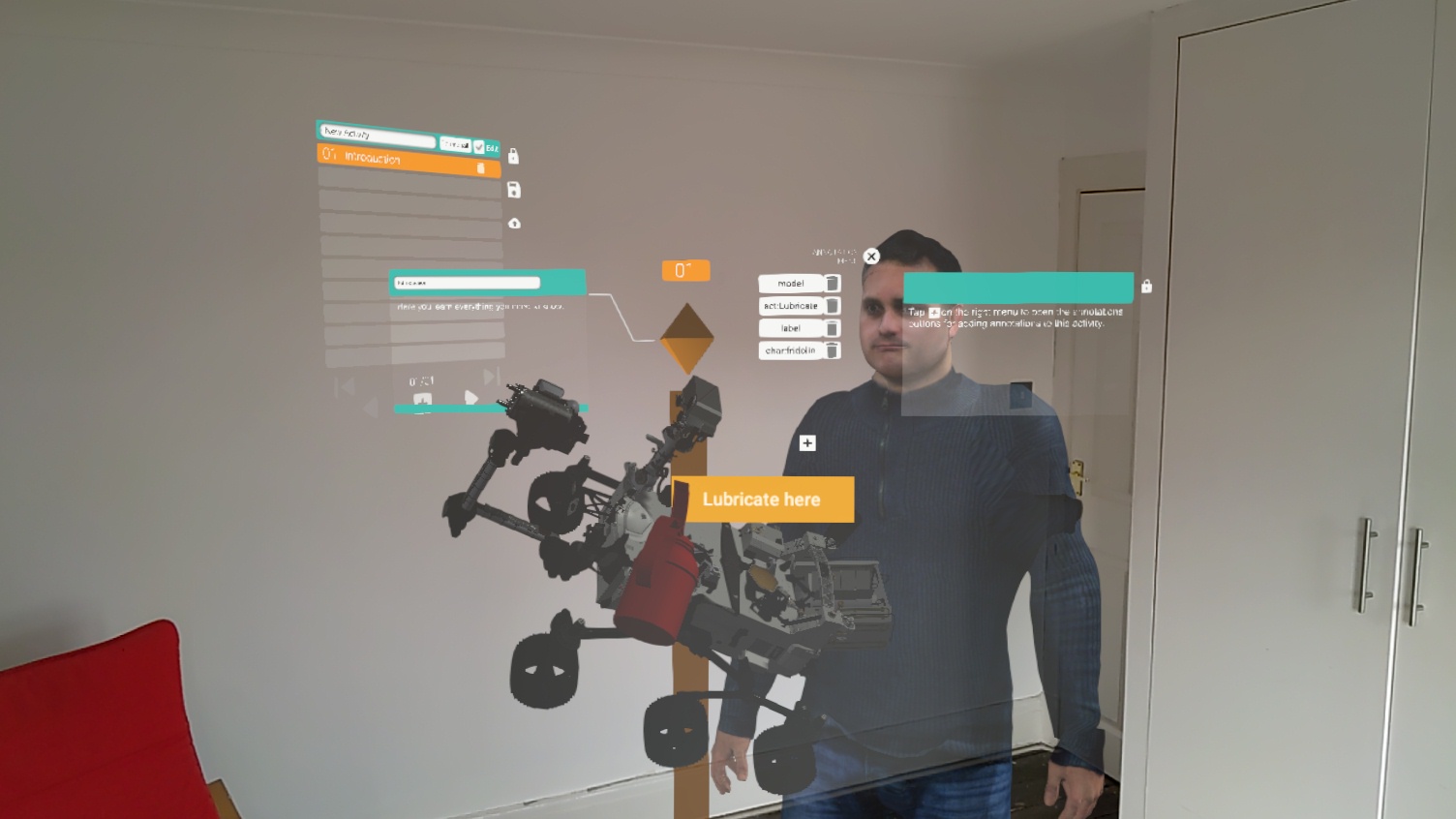
Learning in the Real World – MirageXR stable release 1.2
We are heralding a new era of Personal Computing, the age of eXtended Reality (XR), where virtual and physical realities become one. This affects the way we learn, and the Open University is proudly leading on the development of a reference implementation of an Augmented Reality training system, MirageXR, drawing…
-

IEEE TALE virtually in Japan
Fridolin Wild hosted a special session about the IEEE Augmented Reality Learning Experience Model at IEEE TALE, originally planned to take place in Takamatsu/Japan, on December 8, but now taking place in virtual reality on the iLRN virtual campus. He was joined on the session by Benedikt Hensen from RWTH…